Biosecurity starts long before a disease threat arrives
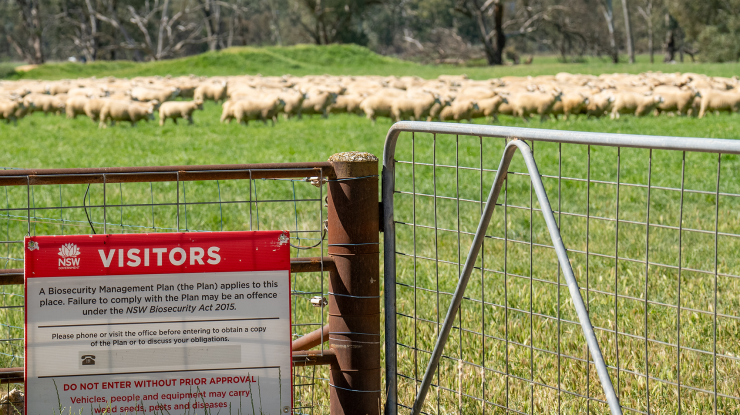
Biosecurity might be most visible at the farm gate, but it doesn't begin and end there.
Thousands of livestock movements take place across Australia every day. Most happen without incident because of the biosecurity systems working quietly in the background.
Every visitor sign-in, livestock movement record and vaccination decision plays a part in protecting Australia’s sheep industry. Together, they help maintain animal health and support the market access Australian sheep producers rely on.
Biosecurity might be most visible at the farm gate, but it doesn’t stop there. Transport operators, saleyards, processors, industry bodies and governments all play a role in keeping Australia’s sheep industry moving safely.
In the wool sector, traceability is another important piece of the puzzle. Systems such as bale identification, and the Australian Wool Traceability Hub allow wool bales to be tracked through the supply chain, strengthening preparedness and supporting market access if a disease event were to occur.
Making biosecurity part of everyday management
The Sheep Sustainability Framework (SSF) tracks a range of indicators including Australia's freedom from major livestock diseases, vaccination practices and producer compliance with Livestock Production Assurance (LPA) biosecurity requirements. Rather than simply reporting performance, the data helps industry measure progress, identify opportunities for improvement and demonstrate Australia’s biosecurity credentials to global markets.
While biosecurity plans and assurance requirements are important, Rob Barwell, Animal Health Australia (AHA) Head of Program – Biosecurity, said the greatest value comes from embedding biosecurity into everyday business operations.
"The best defence against pests and diseases on-farm is having a sound biosecurity plan in place and implementing the practices in that plan, rather than it just being a paper document that doesn't get used," Rob said.
Putting those plans into practice helps reduce the risk of introducing costly diseases, weeds and pests onto a property while supporting animal health, productivity and profitability.
"It's better to keep diseases out rather than try and manage them on farm, it’s also much more cost effective," he said.
Good biosecurity doesn’t just protect the individual farm. Every producer who manages livestock introductions carefully, maintains a biosecurity plan or monitors animal health reduces the risk of diseases spreading more widely through the industry.
Market access starts with animal health
Australia’s strong biosecurity systems do more than protect animal health. They help preserve access to domestic and international markets.
For Brydie Creagh, Australian Wool Exchange (AWEX) Sustainability and Integrity Manager and SSF Steering Group member, Australia’s animal health status underpins the industry’s ability to trade.
"If we do have an outbreak of an emergency animal disease like foot-and-mouth disease or lumpy skin disease, we may no longer be able to export our products that are produced on farm," Brydie said.
"For Australia, being such an export-focused country, this would mean we're not able to access those markets that we're usually exporting to."
The impacts extend beyond exports. Disease outbreaks can also disrupt livestock movements between regions, affect businesses throughout the supply chain and restrict access to domestic and international markets.
Brydie said Australia's animal health credentials, combined with recognised production standards and traceability systems, help distinguish Australian sheep products and maintain their competitive global edge.
"It really puts us ahead in terms of being seen as a premium, high-quality product when we're sending into higher-value markets," she said.
Biosecurity is a shared responsibility
The SSF data reinforces that biosecurity doesn’t begin and end at the farm gate and is not the responsibility of producers alone.
"Every member of the supply chain has to have their own biosecurity management plans and look at how they make sure they're preventing any risk of biosecurity diseases being transferred between animals," Brydie said.
From transport operators and saleyards to processors, industry organisations and government agencies, every part of the supply chain contributes to Australia's biosecurity system.
"Everyone in the supply chain has a role in biosecurity," Rob said.
"Saleyards bring together large numbers of stock, while transporters are moving animals long distances, so managing those risks is important."
Processors also play an important surveillance role through programs such as the National Sheep Health Monitoring Project, which identifies conditions that may not be visible on-farm, and feeds that information back to producers. This information can then be used to inform decisions about vaccinations, drenching and flock health programs.
Measuring performance, identifying opportunities
The value of the SSF isn’t just in reporting industry performance. It also helps identify where more support or education might be needed.
By tracking biosecurity planning, vaccination practices and animal health surveillance, the data shows where progress is being made and where there are opportunities to improve.
Rob said having access to industry-wide information helps ensure resources and extension efforts are directed where they can have the greatest impact.
"It's really valuable to be able to see where we're doing well and where there are opportunities to improve," he said.
That information can help guide future investment in extension, research and education, while giving industry a clearer picture of how biosecurity practices are being adopted across the country.
"Having that visibility helps industry focus its efforts on strengthening preparedness before problems emerge."
More information
Contact:
Resources:
- Develop a biosecurity plan, access practical resources and find information on livestock introductions, visitor management and disease prevention.
- Find out more information on biosecurity planning requirements, National Vendor Declarations (NVDs) and on-farm assurance standards.
- Visit the Australian Wool Traceability Hub for more resources on Australian wool's Emergency Animal Disease (EAD) response plan and commercial traceability.
- Visit the AHA website for resources on emergency animal diseases, biosecurity preparedness and industry-wide biosecurity programs.
- Explore the SSF’s data on biosecurity, animal health, traceability and other sustainability indicators across the Australian sheep industry.
- Subscribe to SSF updates to stay informed about industry performance, sustainability initiatives and emerging priorities.